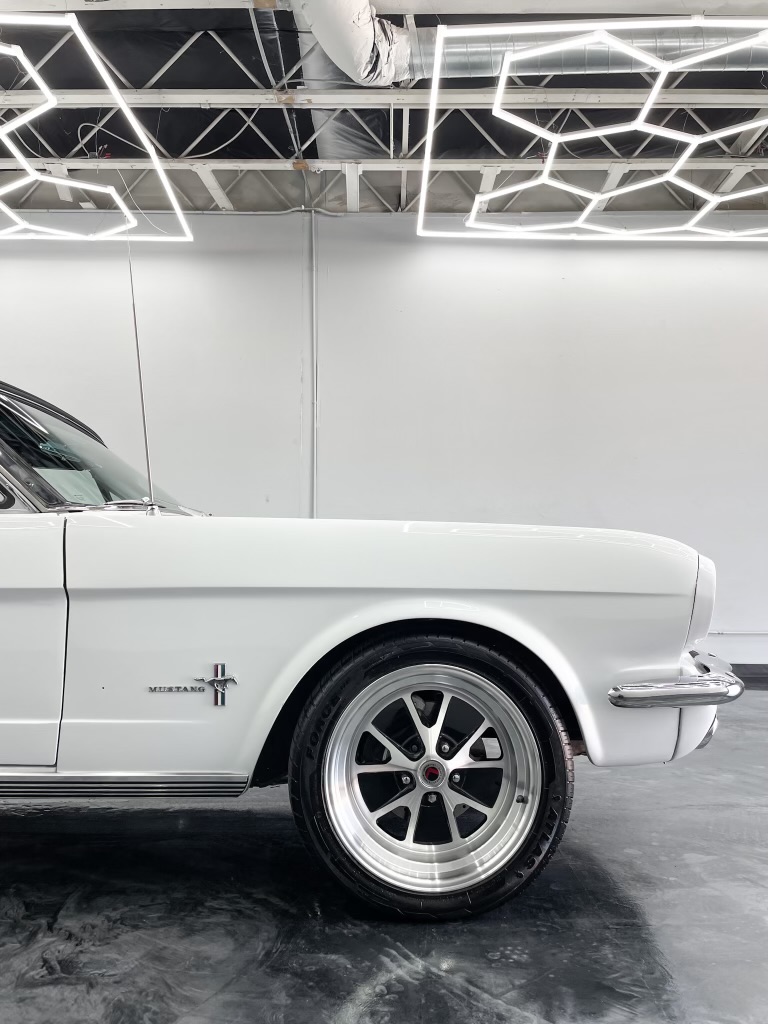
A classic-car brake system may look simple—just a few hydraulics and friction parts—but in Henderson’s demanding conditions, even well-preserved originals can fail prematurely. Whether your ride still has its factory drums or you’ve installed early disc brakes, understanding how each component works, how it wears, and how to upgrade it is essential. In this guide, you’ll learn:
The basics of hydraulic braking
The pros and cons of drum vs. disc systems
How heat, dust, and desert roads affect brakes
Maintenance routines to keep stops crisp
Upgrade paths—from performance pads to full disc conversions
Our step-by-step service process to restore, upgrade, and test your brakes
Let’s dive in and make sure your classic stops as beautifully as it goes.
Brake System Fundamentals
At its core, a hydraulic brake system converts pedal force into stopping power via:
Pedal & Linkage: Amplifies foot pressure.
Master Cylinder: Pressurizes brake fluid.
Brake Lines & Hoses: Transmit fluid pressure to wheels.
Wheel Actuators:
Drum Brakes: Push shoes outward.
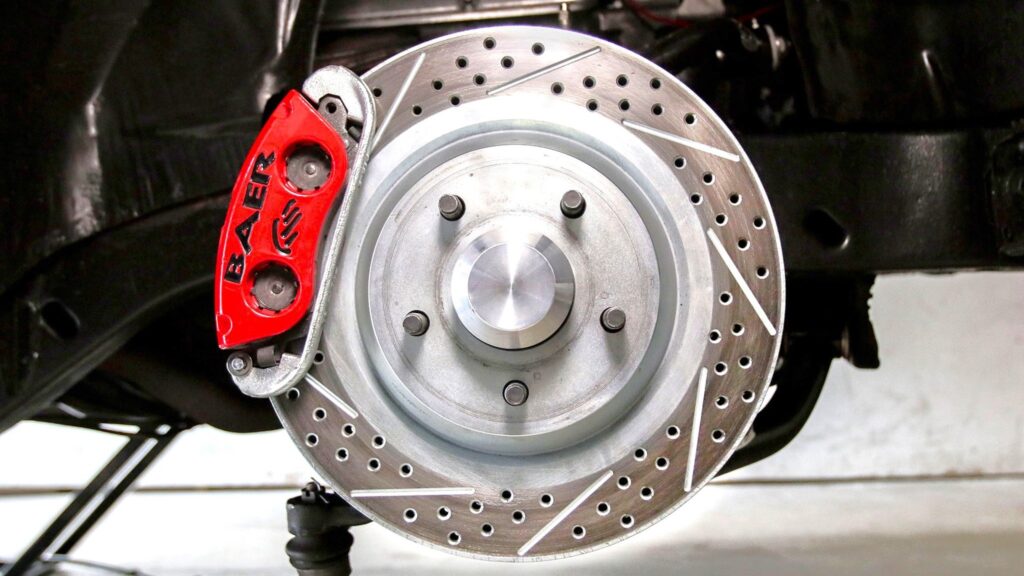
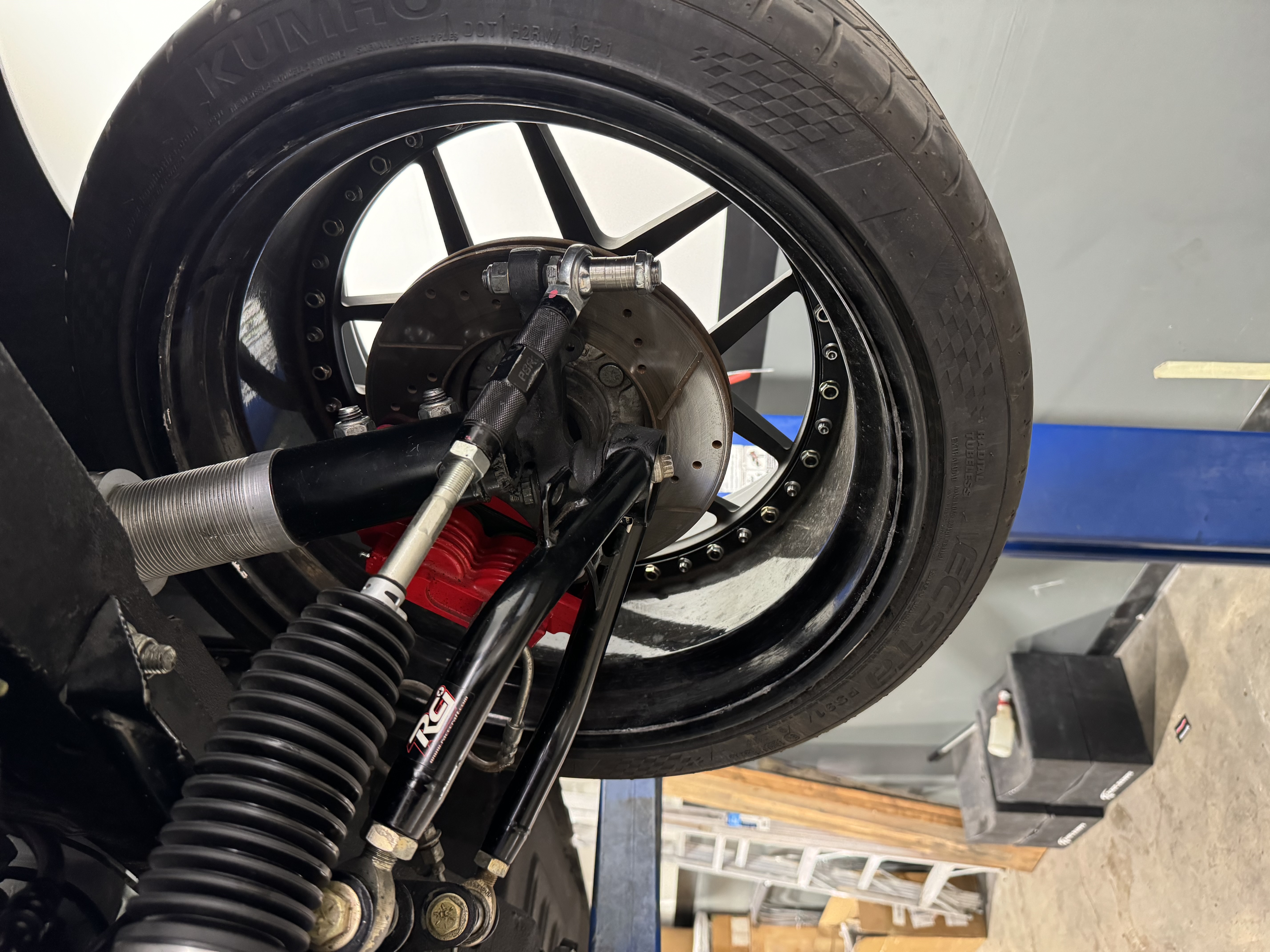
Disc Brakes: Clamp pads onto a rotor.
Calipers or Wheel Cylinders: Multiply hydraulic force.
Friction Components: Shoes or pads dissipate kinetic energy as heat.
Proper function depends on airtight hydraulics, quality fluid, and adequate cooling.
Drum Brakes vs. Disc Brakes
Drum Brakes
How They Work: Shoes press outward against a spinning drum.
Pros: Period-correct, self-energizing at low speed, low initial cost.
Cons: Poor heat dissipation, prone to fade under repeated stops, harder to inspect/adjust.
Disc Brakes
How They Work: Calipers squeeze pads on a flat rotor.
Pros: Superior cooling, consistent pedal feel, easier pad changes and inspections.
Cons: Less authentic on very early classics, modestly higher cost.
Many Henderson restorers start with front-disc conversions for traffic ease, then opt for four-corner disc systems for full performance.
Key Brake Components
Brake Shoes & Pads
Drum Shoes: Expandable, riveted or bonded.
Brake Pads: Available in organic, semi-metallic, and ceramic compounds.
Tip: Replace pads at <3 mm thickness; shoes at <1 mm.
Drums & Rotors
Brake Drums: Check for out-of-round and wall thickness. Machine or replace when beyond spec.
Rotors: Slotted, drilled, or dimpled for performance; require minimum thickness for safe machining.
Master Cylinder
Dual-Circuit Designs: Improve safety by isolating front and rear circuits.
Bore Size: Match to caliper volume for proper pedal travel and pressure.
Hydraulic Lines & Hoses
Steel Lines: Permanent routing; check for corrosion at fittings.
Rubber Hoses: Flexible but expand under pressure—consider stainless-steel braided upgrades.
Wheel Cylinders & Calipers
Drum Wheel Cylinders: Rebuild every 3 years to prevent leaks.
Calipers: Single vs. multi-piston; multi-piston calipers offer more even pad pressure.
Brake Boosters & Power Assist
Vacuum Boosters: Standard on many ’60s–’70s classics; may struggle with large-cam engines.
Hydroboost: Uses power-steering pressure for consistent assist—ideal for restomods with big cams.
Challenges in Henderson’s Environment
Extreme Heat (110 °F+): Lowers fluid boiling point, leading to vapor lock and fade.
Desert Dust & Sand: Accelerates pad/rotor wear and clogs seals.
Monsoon Humidity: Moisture absorption in fluid causes corrosion inside lines and cylinders.
Installation: Direct replacement routed along OEM lines.
High-Performance Master Cylinders & Boosters
Oversized Masters: Match larger caliper volumes.
Hydroboost Systems: Use power-steering pressure for reliable assist under heavy cam loads.
The 777 Motorsports Brake Service Process
Free Vision Session
Assess your classic at our shop (3271 S. Highland Dr #709) or on-site.
Comprehensive Inspection
Fluid analysis, pad/shoe, drum/rotor measurements, hydraulic system pressure test.
Transparent Quotation
Line-item pricing for rebuilds, upgrades, and replacements—no hidden fees.
Skilled Service & Upgrades
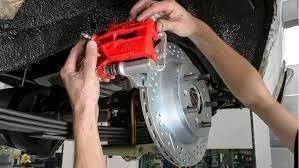
Rebuild or replace master cylinders, wheel cylinders, calipers; install conversions or performance components using OEM-quality parts.
Brake Bedding & Road-Test
Controlled bedding loops on private lots; canyon and freeway merges to verify fade resistance.
Customer Walk-Through
Demonstrate improved pedal feel, stopping distances, and share maintenance schedule.
All brake work carries our lifetime workmanship warranty and 2-year parts warranty for peace of mind.
Service Areas We Cover
Serving Henderson and Southern Nevada, including:
Henderson: Green Valley, Anthem, Inspirada, Whitney Ranch
Summerlin & Spring Valley
Las Vegas: Paradise (The Strip), Spring Valley
North Las Vegas: Aliante, Eldorado
Boulder City & Lake Mead
We offer mobile brake inspections and enclosed transport within 45 miles of our Las Vegas shop.
Frequently Asked Questions
How often should I bleed my brakes? → Annually or whenever you replace fluid—moisture buildup from monsoons can ruin hydraulic performance.
Can I upgrade just the front brakes? → Yes—front-only disc conversions yield significant stopping power improvements before tackling the rear.
Are performance pads noisier? → Modern low-dust, low-noise compounds provide strong bite without squeal—perfect for daily driving.
Will hydroboost work on my carbureted classic? → Yes—leveraging your power-steering pump, hydroboost functions independent of engine vacuum.
How do I avoid brake fade on canyon runs? → High-temperature fluid, drilled/slotted rotors, and multi-piston calipers keep fade at bay on steep descents.
Do stainless lines require special installation? → We route them over metal clips and protective loom to prevent vibration chafing against the chassis.
What’s the first step to get started? → Call (844) 777-1296 or schedule a parts consultation for a free vision session.
Next Steps & Contact
Stop worrying about fade, pedal travel, or seized cylinders—upgrade and maintain your classic’s brakes with Henderson’s trusted experts at 777 Motorsports.
Call (844) 777-1296 or book your brake service today. Drive safely with stopping power you can rely on, mile after desert mile!